Friday, 26 July 2013

Sarawak Cultural Village

Tucked away at the foothills of legendary Mount Santubong, 35 km from Kuching is Sarawak's fascinating cultural showcase, the award winning "Sarawak Cultural Village" which is also the venue for the World Harvest Festival and the Rainforest World Music Festival, an internationally renowned festival.

This living museum is wholly owned by the Sarawak Economic Development Corporation (SEDC) depicts the heritage of the major racial groups in Sarawak and conveniently portrays their respective lifestyle amidst 14 acres of tropical vegetation.

Here, it is possible to see Sarawak's ethnic diversity at a glance. The handicraft is both bewildering and tempting, including the Kain Songket (Malay cloth with gold inlay), Pua Kumbu (Iban housewives textiles), Melanau Terendak (sunhat), Bidayuh tambok (basket), Iban parang (swords), Orang Ulu wood carving and Chinese ceramics.

The 45-minute cultural performance of songs, dances and entertainment is something you will not want to miss during your visit to Sarawak.

The entrance to Sarawak Cultural Village

Reference 1

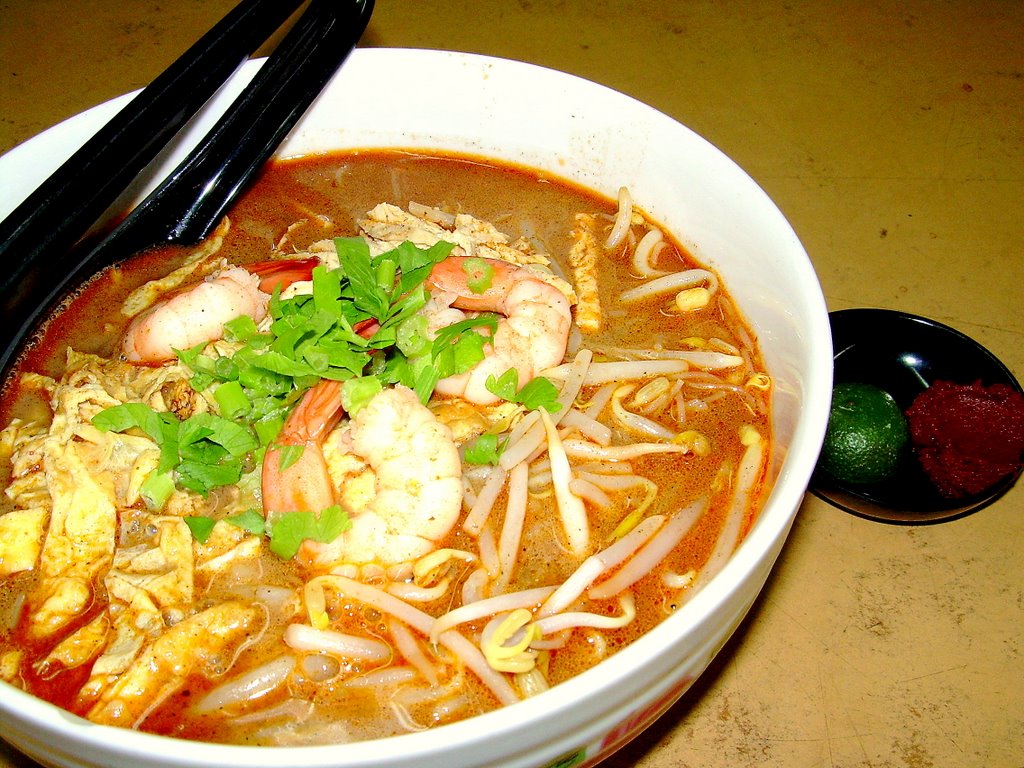
Sarawak Laksa

Sarawak laksa (Malay: Laksa Sarawak) comes from the Malaysian state Sarawak, on the island of Borneo. It is actually very different from the curry laksa as the soup contains no curry at all. It has a base of sambal belacan, sour tamarind, garlic, galangal, lemon grass and coconut milk, topped with omelette strips, chicken strips, prawns, fresh coriander and optionally lime. Ingredients such as bean sprouts, (sliced) fried tofu or other seafood are not traditional but are sometimes added.

Laksa Sarawak is usually served with sambal belacan and lime

Reference 1

Gawai Dayak

The festival begins on the evening of May 31 with traditional music and Muai Antu Rua - a ritual aimed at keeping the spirit of greed from ruining the celebration. During Muai Antu Rua two men drag a basket along the longhouse; families in each room throw clothing and household items into the basket. The basket is later dumped on the ground as a "sacrifice" to prevent interference from evil spirits.

The Dayak performing the Ngajat dance
At sundown, the festival chief sacrifices a chicken to show thanks for a good harvest and to ask the same for next year's rice harvest. Dinner - usually accompanied by bamboo-steamed rice and sweet cakes made from coconut milk - is served after the sacrifice. Just before midnight a procession known as the Ngalu Petara passes by seven times to welcome the friendly spirit gods to the festival. At midnight, the festival chief holds a toast with tuak - locally-brewed rice wine - for long life. The festival turns into an informal free-for-all following the toast with dancing, singing, and drinking.